Focus Keyword: Outstanding CQC Rating
Estimated Reading Time: 5 minutes
Could Your Service Be Rated Outstanding?
Every health and social care provider wants to deliver exceptional care, but achieving an Outstanding CQC rating isn’t about having the biggest budget or the newest building. It’s about creating a culture where people receive excellent care, staff feel empowered, and continuous improvement becomes part of everyday practice.
Whether you provide domiciliary care, supported living, residential care, nursing care or specialist services, understanding what the Care Quality Commission (CQC) expects can help you prepare for your next inspection and improve outcomes for the people you support.
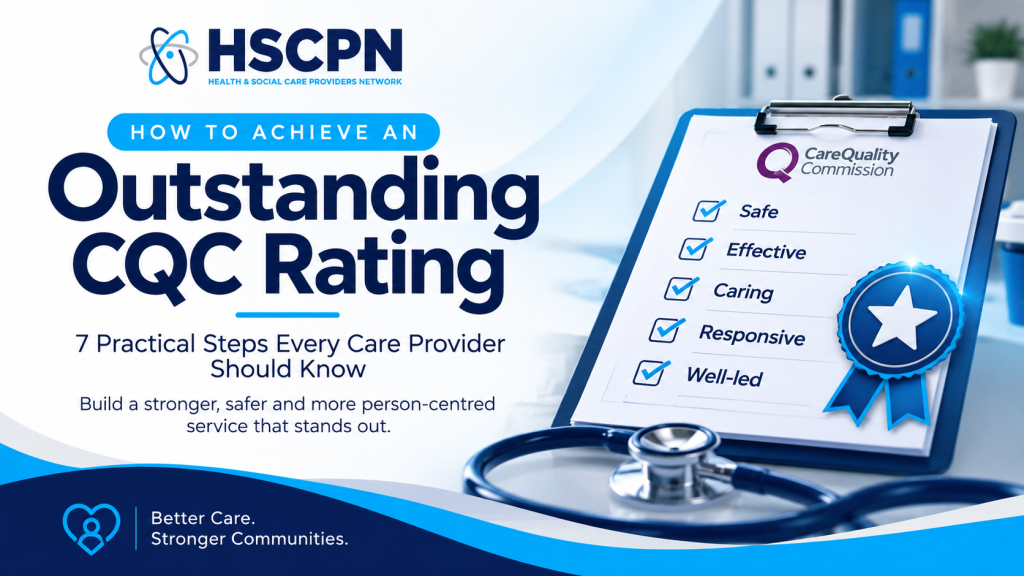
According to the Care Quality Commission (CQC), services are assessed against five key questions that determine whether care is Safe, Effective, Caring, Responsive and Well-led. These standards form the foundation of every inspection.
👉 Learn more about the CQC inspection framework
What Does an Outstanding CQC Rating Mean?
An Outstanding rating is the highest recognition a regulated health or social care provider can receive in England.
It means your organisation doesn’t just meet the required standards—it consistently exceeds them by demonstrating exceptional leadership, person-centred care and a commitment to continuous improvement.
Importantly, inspectors are looking beyond policies. They want to see how your team puts those policies into practice every single day.
7 Practical Steps to Achieving an Outstanding Rating
1. Build a Positive Safety Culture
Outstanding providers encourage staff to report concerns without fear of blame. Instead of asking “Who made the mistake?”, they ask “What can we learn from this?”
A learning culture demonstrates strong leadership and improves outcomes for everyone.
2. Invest in Your Workforce
Your staff are your greatest asset.
Provide regular supervision, ongoing professional development and opportunities to build confidence. Teams that feel supported are more likely to deliver compassionate, high-quality care.
Useful training resources are available through Skills for Care:
3. Put People at the Centre of Every Decision
Outstanding care is always person-centred.
Care plans should reflect individual wishes, preferences and goals—not simply medical needs.
Inspectors often speak directly with people receiving care and their families to understand how they experience the service.
4. Listen to Feedback—and Act on It
Collecting feedback is only the beginning.
Outstanding organisations show inspectors exactly how comments, compliments and complaints have led to real improvements.
Evidence of learning is often just as important as the feedback itself.
5. Keep Clear Evidence
One of the biggest mistakes providers make is assuming inspectors will simply “see” the good work taking place.
Evidence matters.
Keep records of:
- Training
- Audits
- Compliments
- Staff meetings
- Governance reviews
- Service improvements
- Community partnerships
Good practice supported by evidence creates confidence during inspections.
6. Develop Strong Leadership
Outstanding organisations have leaders who inspire rather than simply manage.
Effective leaders:
- communicate openly,
- support staff,
- encourage innovation,
- celebrate success,
- continuously look for opportunities to improve.
Leadership culture influences every CQC rating.
7. Improve Every Day—Not Just Before Inspection
The best providers don’t prepare for inspections a few weeks before they happen.
Continuous improvement becomes part of daily practice.
Small improvements made consistently throughout the year often produce outstanding inspection outcomes.
Common Myths About Outstanding Ratings
❌ “We need more money.”
Not necessarily. Many Outstanding-rated services are small organisations with limited budgets but excellent leadership and strong values.
❌ “One mistake means we’ll never be Outstanding.”
False. Inspectors understand mistakes happen. They are far more interested in how organisations respond, learn and improve.
❌ “Outstanding is only for large providers.”
Many smaller providers achieve Outstanding because they build closer relationships with the people they support.
Why Leadership Matters
Research consistently shows that organisations with engaged leaders and supported staff deliver better outcomes for people receiving care. Creating a positive workplace culture benefits everyone—from employees to families and, most importantly, the people using your service.
Key Takeaway
Achieving an Outstanding CQC rating isn’t about preparing for inspection day. It’s about creating an organisation where quality, kindness, accountability and continuous improvement become everyday habits.
Ask yourself:
The answer to that question often determines the final rating.
About HSCPN
The Health and Social Care Providers Network (HSCPN) supports health and social care professionals through networking, training, collaboration and practical resources that help organisations improve quality, strengthen compliance and deliver better outcomes for the communities they serve.